

How smart irrigation works
Explore how intelligent soil moisture sensors, real-time analytics, and automated drip systems unite to eliminate guesswork, conserve precious water resources, and cultivate resilient crops across the United Arab Emirates.

Step 1: Measuring real-time soil moisture
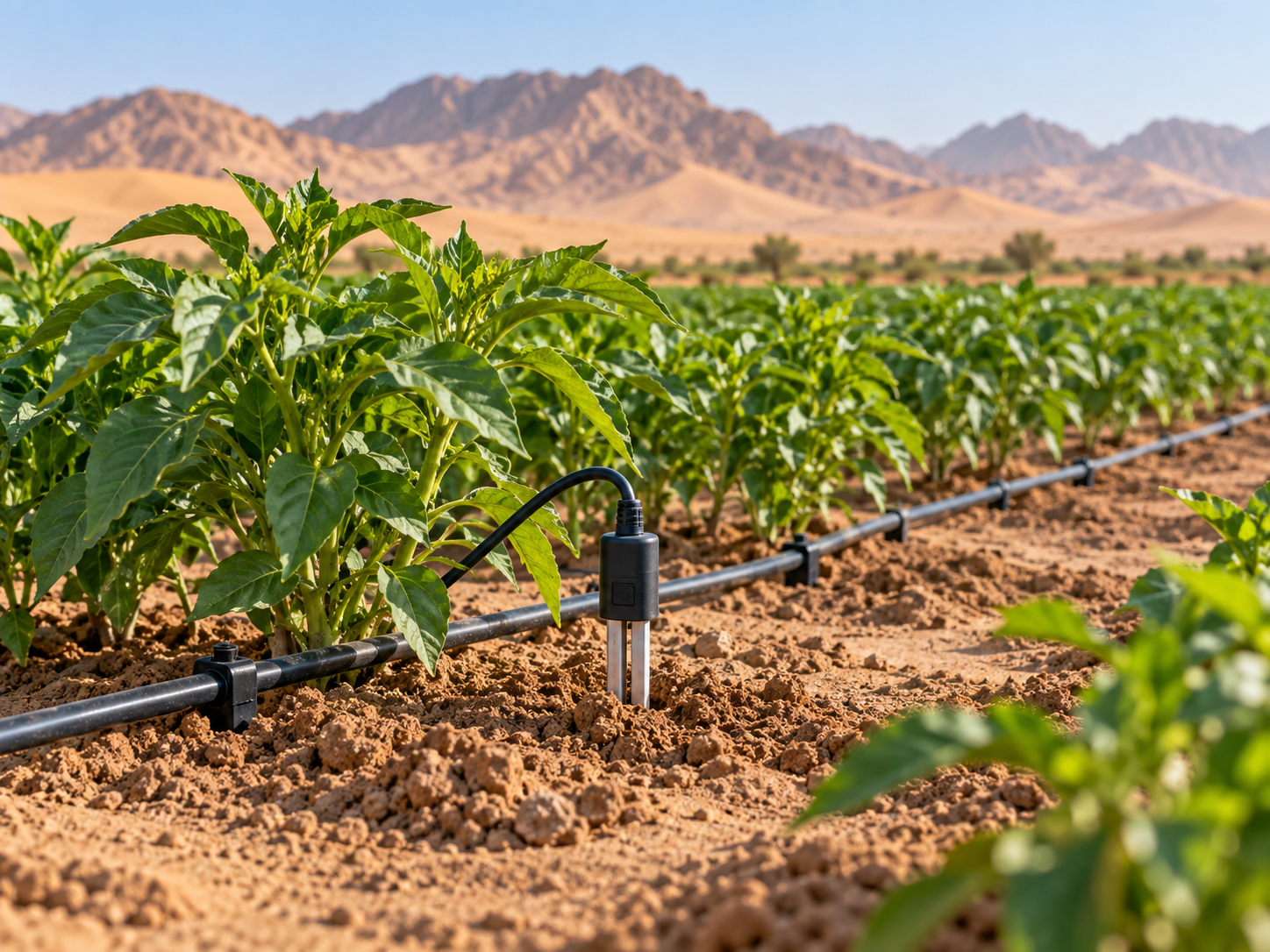
Precision begins directly in the root zone. Robust soil moisture sensors are placed throughout agricultural fields to continuously monitor exact ground conditions. Rather than relying on rigid daily schedules or intuition, these specialized probes deliver real-time data regarding exactly how dry or damp the soil is at root depth.

Step 2: Processing data and deciding water needs
The smart irrigation controller and cloud dashboard process incoming sensor readings instantly. By tracking precise moisture thresholds, the system determines the exact moment crops require hydration. Farmers can oversee live metrics on their mobile phones, eliminating the need to physically survey fields every day.

Step 3: Automated precision delivery and cutoff
When soil drops below the ideal moisture level, automated valves open to supply water directly via drip irrigation lines. As soon as optimum hydration is detected, the system immediately halts the flow. This accurate cutoff prevents overwatering, protects delicate root systems, and maximizes water efficiency for regional food security.
Step 4: Stop irrigation and continue monitoring
Once the soil reaches the ideal moisture level, the system automatically stops watering. The soil moisture sensors continue checking the soil in real time, so irrigation only starts again when the crops actually need more water. This helps prevent overwatering, reduces water waste, and keeps irrigation efficient.
Create Your Own Website With Webador